Mulch Overgrowth Directly Into the Soil
Forestry Mulching Services in Gladstone, Illinois and Surrounding Areas
Overgrown fence lines, wooded acreage, and brush-covered land around Gladstone and the neighboring cities can be cleared without hauling truckloads of debris off your property. Forestry mulching grinds trees and brush into fine mulch that stays on site and breaks down into the soil. The process opens up land while reducing erosion and improving ground cover at the same time.
Husband Family Excavating uses mulching equipment designed to process vegetation in place, turning dense growth into a layer of organic material that protects the soil. The service is faster and more eco-friendly than traditional clearing methods, and it is commonly used on rural properties around Gladstone where landowners want to reclaim acreage without stripping topsoil. You end up with open ground that is ready to use or plant.
Get started with forestry mulching by reaching out to discuss your property and what you want to clear.
Why Mulching Works Better Than Hauling and Burning
The mulching head processes trees, stumps, and brush as it moves across the property, leaving behind a layer of shredded material that covers bare soil and prevents erosion. There is no need to pile debris, rent dumpsters, or schedule burn permits. Gladstone and the surrounding areas properties with rolling terrain or wooded sections benefit from the way mulch holds moisture and keeps roots from washing out during heavy rains.
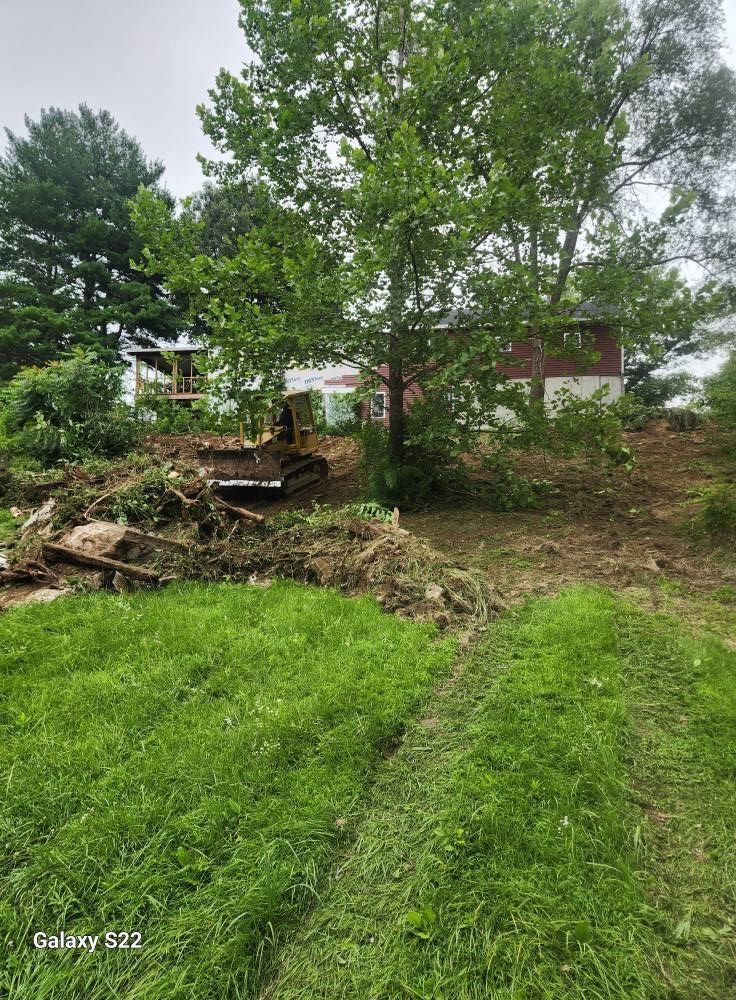
After mulching, you will see cleared land covered with an even layer of wood chips and organic matter instead of bare dirt or piles of limbs. The mulch layer breaks down over time and adds nutrients back into the soil, which helps if you plan to seed or plant later. You can walk the area immediately and start using it for grazing, planting, or access.
Mulching works best on properties with moderate brush density and small to mid-sized trees. Extremely large hardwoods or heavily matted root systems may require additional equipment or clearing methods. The process does not include grading or seeding, but it leaves the ground in better condition than most other clearing techniques.
Landowners Often Ask How Mulching Differs From Clearing
People considering mulching for the first time usually want to know how the process works, what stays on the property, and whether it will interfere with future plans.
Mulching makes sense when you want to clear brush and small trees without disturbing topsoil or hauling debris. It is faster, quieter, and leaves the ground in better condition for future use around Gladstone and its neighboring cities properties.
Husband Family Excavating provides forestry mulching throughout the Gladstone and surrounding areas and can assess your property to determine whether mulching or another clearing method fits your needs. Learn more by reaching out to schedule a site visit and discuss your goals for the land.