
Walls That Hold Soil Where It Belongs
Retaining Wall Installation in Gladstone, Illinois and the Surrounding Areas
If your property in Gladstone or a neighboring city has a steep slope, uneven terrain, or areas where soil slides or erodes after rain, a retaining wall stabilizes the ground and prevents further damage. Without support, slopes wash away, driveways settle, and landscaping shifts downhill. Retaining walls hold soil in place, control erosion, and create usable space on properties with elevation changes.
Husband Family Excavating builds retaining walls for residential, farm, and commercial sites in Gladstone and the surrounding area. Walls are designed to manage elevation changes, support driveways and access roads, and protect structures from soil movement. Installation is often coordinated with grading or site preparation projects to stabilize land before or during construction.
If your property in Gladstone needs a retaining wall, contact Husband Family Excavating to request a retaining wall consultation and address slope or erosion issues.
What's Involved in Building a Retaining Wall
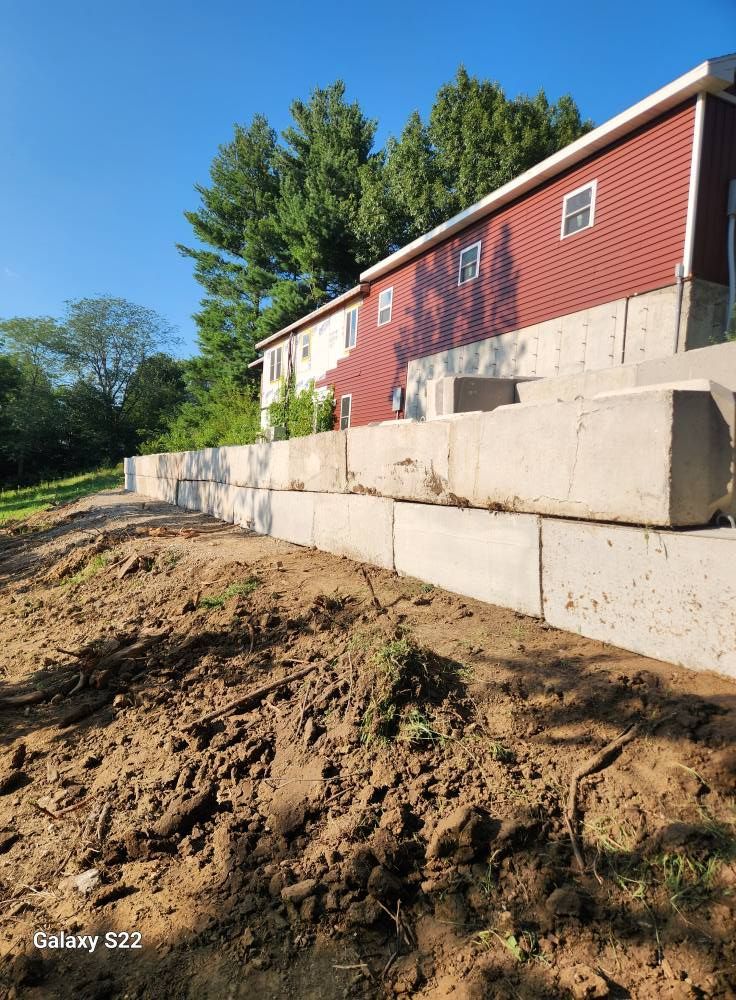
Retaining wall installation in Gladstone and surrounding areas starts with excavating the base of the slope and creating a level, compacted foundation for the wall. Materials such as block, stone, or timber are set in place, with each course secured and backfilled as the wall rises. Drainage systems, such as gravel backfill or weep holes, are installed behind the wall to prevent water pressure from building up and destabilizing the structure.
Once the wall is complete, you'll see a stable, level surface behind the wall where soil no longer slides or erodes. The wall holds back the slope, redirects runoff, and creates functional space for driveways, yards, or building pads. Soil behind the wall stays in place during storms, and drainage systems prevent water from pooling or weakening the structure.
Retaining wall installation does not include decorative landscaping, irrigation, or planting. It focuses on stabilizing the slope and managing drainage. Walls may be built as standalone projects or as part of larger site preparation work, depending on your property's needs and the scope of other excavation or grading tasks.
It's Okay to Have Questions About Your Property
Retaining walls involve site evaluation, material selection, and long-term stability. These questions address what property owners in Gladstone and the surrounding areas typically want to know before installation begins.
Installation time depends on wall length, height, and site conditions. Most residential retaining walls in Gladstone take two to five days to complete, including excavation, wall construction, and backfilling.
If your property in Gladstone or surrounding neighorhood has slopes that need stabilizing or soil that's sliding or eroding, Husband Family Excavating can evaluate the site and install a retaining wall that holds the ground in place. Reach out to request a retaining wall consultation and protect your land from further damage.